Splitting a $340 dinner check eight ways still turns into a 20-minute standoff at the table in 2026 unless the app on hand actually itemizes who ordered what. Group size is the real stress test — a bill splitting app that works fine for two people usually falls apart at ten.
- BillTap wins for a bill splitting app for large groups because it itemizes a photographed receipt instead of forcing an even split — Buy.
- IOU-tracking apps like Splitwise fit recurring roommate groups better than a one-off dinner for 12 — Consider.
- Apps that require every guest to download a separate app slow down groups of 10 or more — Skip.
- QR-code claiming lets each diner confirm their own items and pay by Venmo, Cash App, or Zelle without touching anyone else's total.
Why this matters
A table of four can eyeball an even split and move on. A table of 12 celebrating a birthday in 2026, with three people who only had appetizers and two who ordered steak and two rounds of drinks, cannot. Even splits punish light eaters and let heavy orderers off the hook, and that friction is exactly why group dinners generate more Venmo disputes than any other payment category.
The fix isn't a calculator. It's an app that reads the actual receipt, lets each person claim their own line items, and routes payment through whatever app they already have open. That's the bar for a real bill splitting app for large groups, not a generic split-the-total tool.
Who this is for
This guide is for anyone organizing a dinner, brunch, or bar tab for six or more people — birthday parties, work team dinners, bachelorette weekends, family reunions — where orders vary wildly and at least one person always ends up covering someone else's forgotten appetizer. If your group is two or three people splitting evenly, a basic calculator app does the job. Past six people with mixed orders, itemization stops being a nice-to-have.
What to look for in a bill splitting app for large groups
Photo-based itemization, not manual entry
Manually typing 22 line items into an app while a table of hungry people waits is how splitting sessions die. A photo of the receipt should populate every item automatically, because typing errors compound fast once you're past eight people.
No download requirement for guests
The organizer downloading an app is fine. Asking 11 other people to download one before they can pay is not — that's the single biggest reason group payment apps stall out mid-dinner. A QR code that opens a mobile web page works because it needs zero installs from anyone but the person who scanned the receipt.
Multiple payout rails in one flow
A group of 12 in 2026 will have a mix of Venmo, Cash App, and Zelle users, plus at least one holdout who insists on cash. An app locked to a single payment method forces half the table to create a new account just to pay their $18 share.
Tax and tip proration built in
Splitting the subtotal evenly and then eyeballing tax and tip separately is where most manual splits go wrong. Tax and tip need to scale proportionally to what each person actually ordered, not get divided by headcount as a flat add-on.
Real-time claim status
At a table of 14, two people will try to claim the same appetizer if the app doesn't show live status. Real-time claiming prevents double-claims and missed items, which is the difference between a bill that closes out in three minutes and one that drags on for twenty.
Four ways groups actually split a bill in 2026
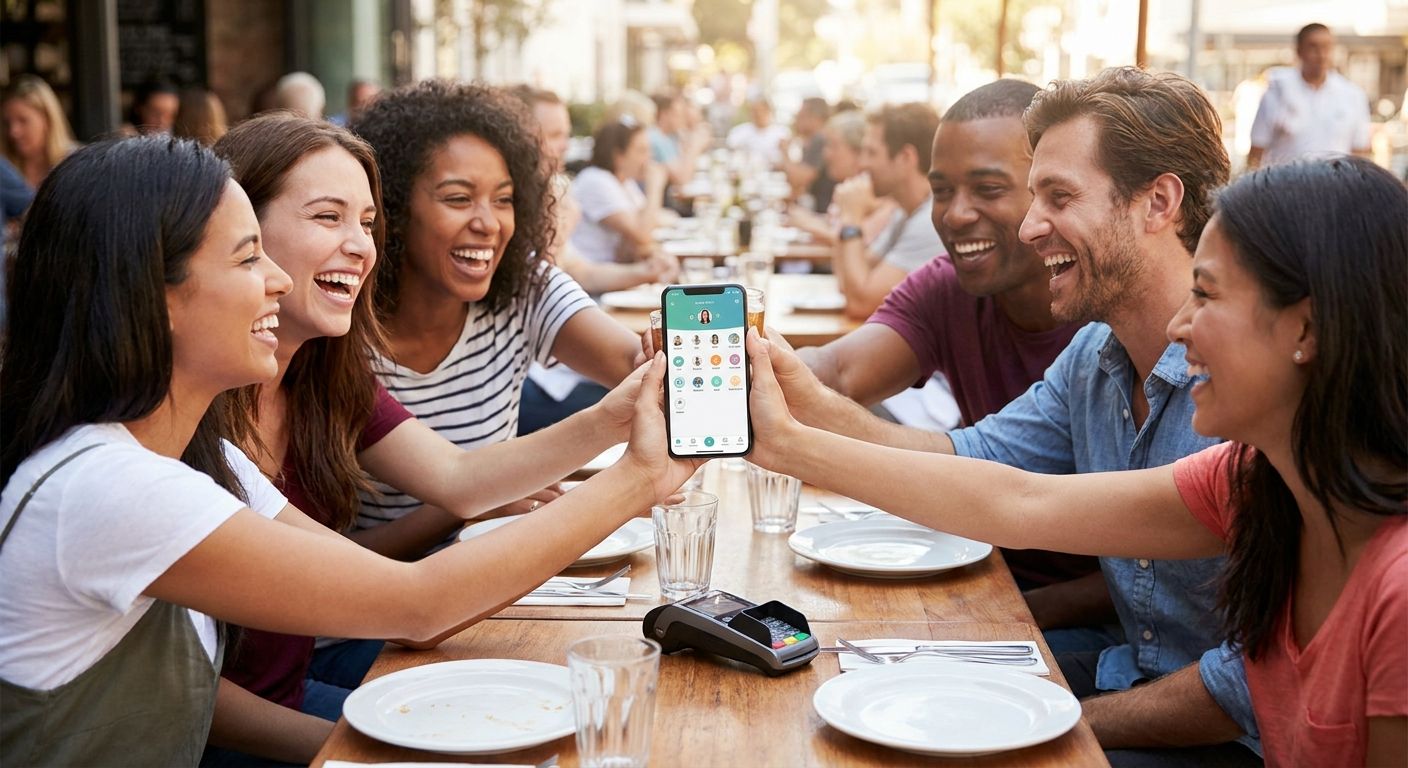
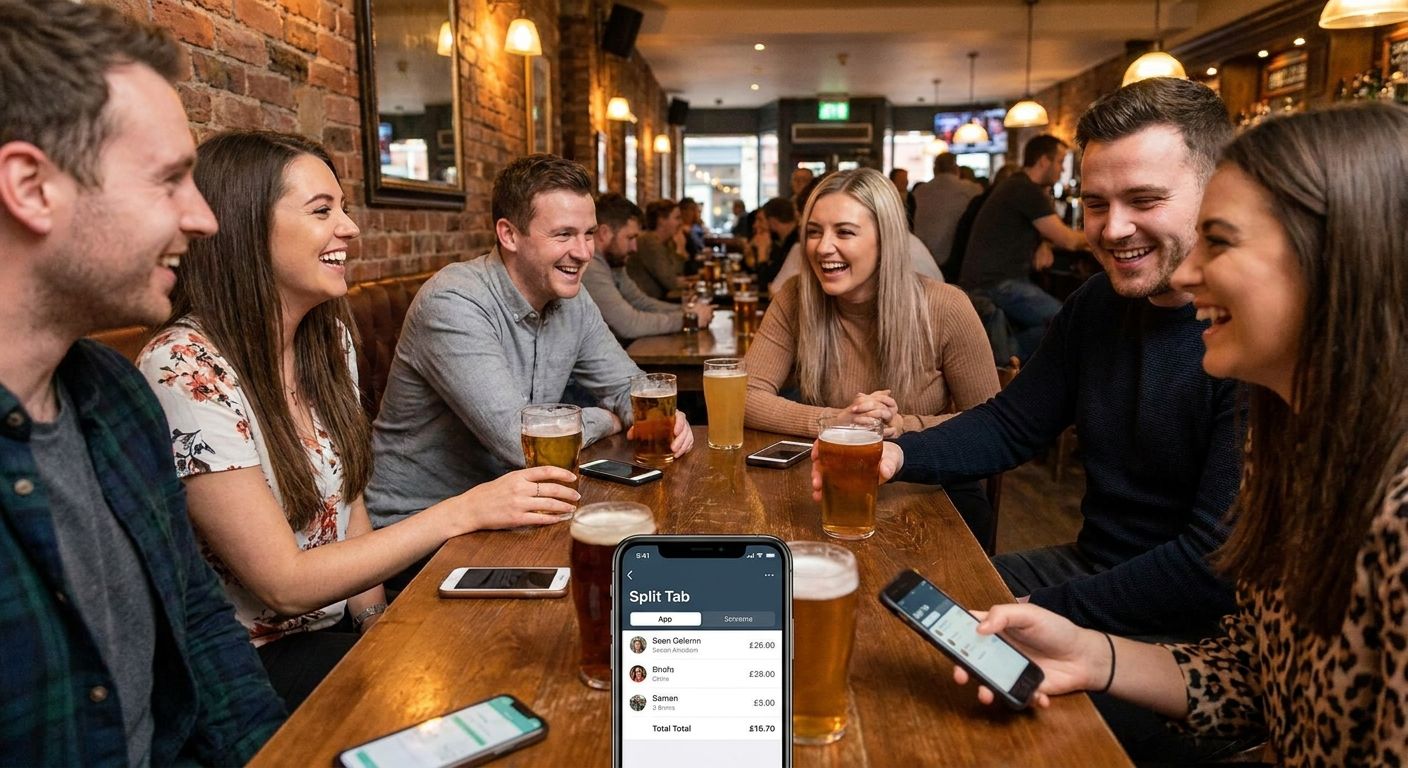
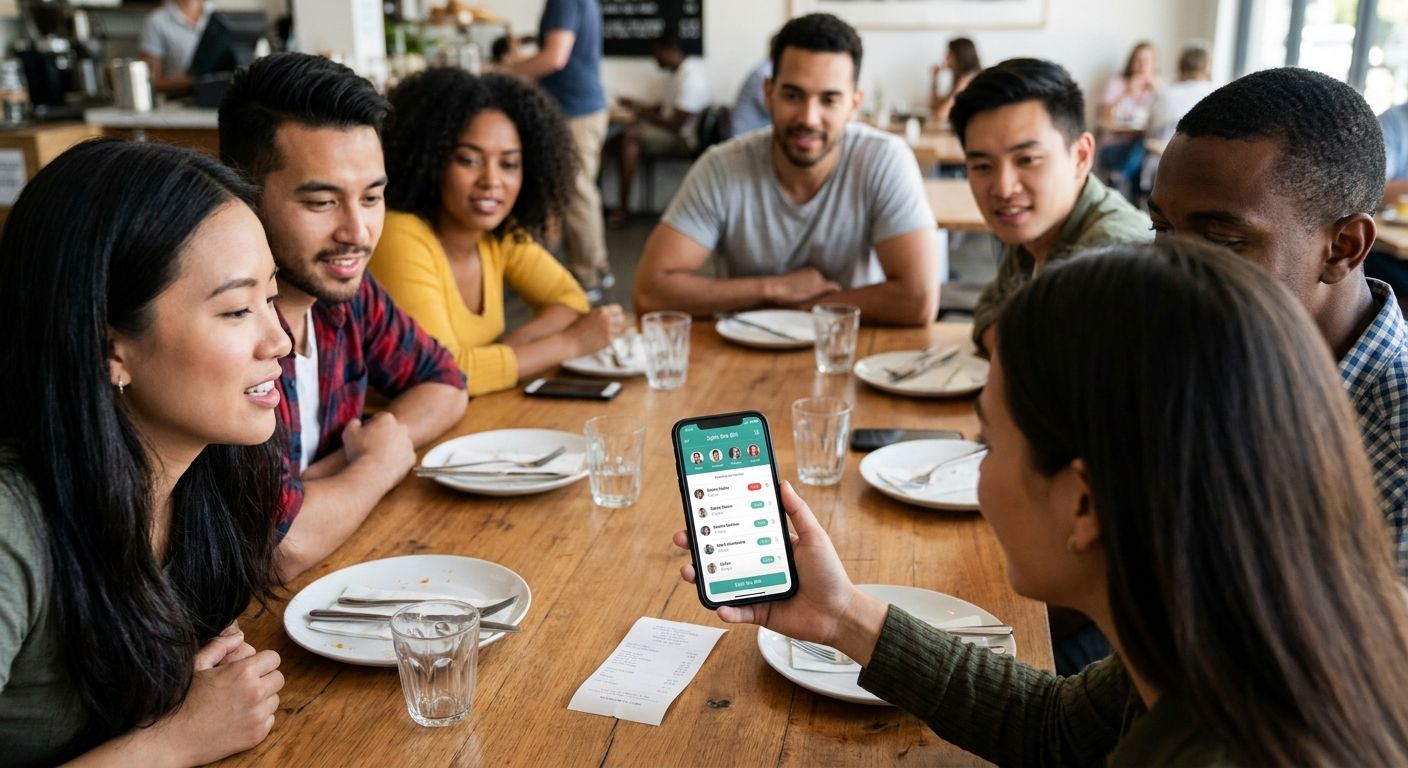
Photo-and-QR itemization — the safe pick. BillTap works by having one person photograph the receipt, then generating a QR code the rest of the table scans to claim their own items and pay by Venmo, Cash App, or Zelle. No one else needs to install anything, and tax and tip get prorated to each claimed item automatically. For a group of 8 to 20 with mixed orders, this is the fastest path to a closed-out check. Buy.
Manual per-person Venmo or Zelle requests — the free but slow pick. The organizer eyeballs the receipt, calculates each share by hand, and sends individual payment requests. It costs nothing extra and needs no new app, but at 10-plus people the math errors and forgotten add-ons pile up fast, and someone always disputes their total. Fine for a table of four, painful for a table of fourteen. Consider for small groups only.
IOU-tracking apps — the wildcard. Apps built around running balances between the same group of people over weeks or months (roommates splitting rent and groceries, a recurring dinner crew) track who owes whom over time rather than settling a single check on the spot. That's a different job than closing out one restaurant bill in real time, and using it for a one-off large-group dinner adds setup overhead the moment doesn't need. Consider only if the same group splits expenses repeatedly; for a single night out, see the step-by-step guide to splitting a restaurant bill by scanning the receipt instead.
Restaurant terminal split-the-check — the skip for spontaneous groups. Some POS terminals let the server split a check into a fixed number of even portions. It works when the restaurant supports it and the group agrees to split evenly, but it can't itemize who ordered what and most groups over eight don't order evenly. Skip unless everyone genuinely ordered the same thing.
Split your next group bill in minutes
Photograph the receipt, scan the QR code, everyone pays their own share.
What to avoid
- Apps that force an even split with no itemization option. They look simple but guarantee someone overpays the moment orders differ, and in a group of 10-plus, orders always differ.
- Apps that require a linked bank account before anyone can pay. Asking 12 people to link a bank account mid-dinner instead of using the Venmo or Cash App they already have open kills momentum.
- Spreadsheet or note-app manual splitting that feels free but costs 20 minutes of math for a table of 14 — the hidden cost is everyone standing around waiting.
Verdict comparison
| Approach | Setup time | Handles 10+ people | Payment rails | Verdict |
|---|---|---|---|---|
| Photo-and-QR itemization | Under 1 minute | Yes | Venmo, Cash App, Zelle | Buy |
| Manual per-person requests | 5-15 minutes | Poorly | Single app per request | Consider (small groups) |
| IOU-tracking apps | 5-10 minutes | Yes, for recurring groups | Varies | Consider (recurring only) |
| Restaurant terminal split | Instant | No | Card only | Skip |
FAQ
What's the best bill splitting app for large groups in 2026?
An app that itemizes a photographed receipt and lets each person claim and pay their own share, like BillTap, works better for large groups in 2026 than a flat even-split calculator. Even splits break down once a table of 8 or more has mixed orders.
Is a photo-and-QR app better than Splitwise for a one-time dinner?
Yes, for a single restaurant check, because Splitwise-style apps track running balances over time rather than settling one bill on the spot. A photo-and-QR itemization app closes out a one-off group dinner faster because it works from the actual receipt.
How do you split a restaurant bill when everyone ordered different amounts?
Photograph the receipt so each line item is captured, then have each diner claim exactly what they ordered rather than dividing the total evenly. Tax and tip should scale proportionally to each person's claimed items, not get divided flat by headcount.
Does BillTap require guests to download an app?
No, guests scan a QR code that opens a mobile web page to claim their items and pay. Only the person photographing the receipt needs to open BillTap directly.
What payment methods does BillTap support?
BillTap supports paying your exact share through Venmo, Cash App, or Zelle. That covers the mix of payment apps most groups already use, so no one has to create a new account mid-dinner.
Can a bill splitting app handle tax and tip proportionally?
Yes, a proper itemized split app prorates tax and tip to each person's claimed items rather than dividing them evenly across the group. That matters most for groups of 8 or more where orders vary widely.
How do large groups avoid double-paying or missing items?
Real-time claim status shows which items are already claimed, which stops two people from both paying for the same appetizer. Without live status, groups of 10-plus routinely end up with unclaimed or double-claimed items.
What size group actually needs an itemized bill splitting app?
Groups of six or more with mixed orders benefit most, since an even split starts overcharging light eaters at that size. Groups of two or three can usually split evenly without an app at all.
One last thing
The hidden cost in most large-group dinners isn't the math, it's the tax and tip rounding that gets ignored when a group splits evenly instead of by item — a table of 12 where three people share a $40 appetizer plate and nine people don't will misallocate tax on that plate every single time with a flat split. Itemized claiming in 2026 fixes that by tying tax and tip to what each person actually claimed, not to headcount.